News
An ABU Perspective: In an Age of AI and Climate Crisis, Trust Matters The Most
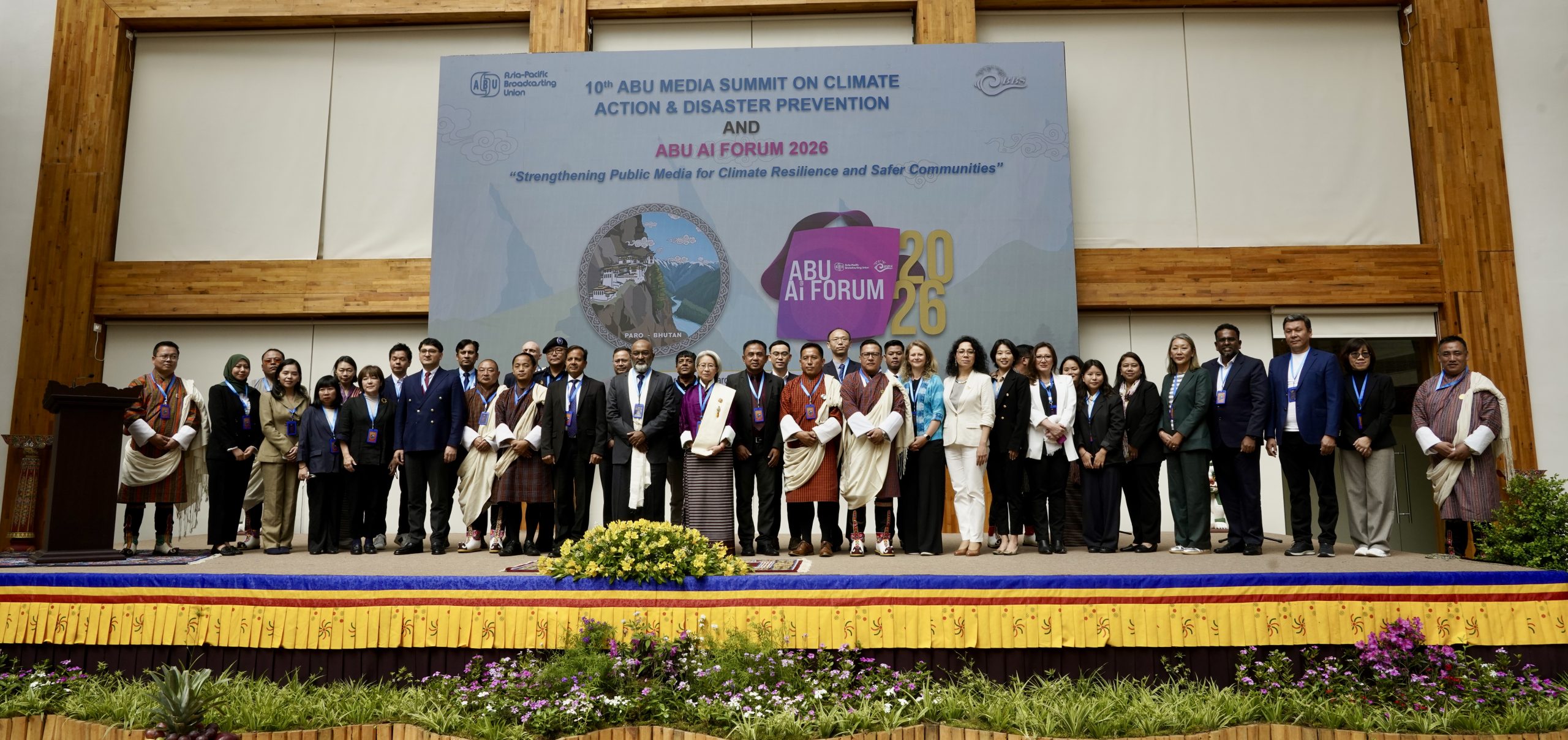
From 16 to 18 June 2026, the 10th ABU Media Summit on Climate Action & Disaster Prevention and the ABU AI Forum 2026 brought together broadcasters, policymakers, scientists, humanitarian organisations, technology leaders, and media professionals in Paro, Bhutan. Led by Nargiza Numanova, Head of the Secretary-General’s Office at the Asia-Pacific Broadcasting Union (ABU), the event explored two of the most significant forces shaping our future: climate change and artificial intelligence.
Although I was not in Bhutan, I followed the discussions through ABU’s livestream coverage, which attracted an average of approximately 300 viewers per day. As I watched the sessions unfold, one theme emerged repeatedly across discussions on climate communication, disaster preparedness, artificial intelligence, and journalism: trust.
It is perhaps unsurprising that trust has become such a dominant topic. We live in an age where information travels instantly, yet public confidence in information is increasingly fragile. Audiences are no longer simply asking whether information is accurate; they are questioning whether the institutions delivering that information deserve their trust in the first place.
This challenge was particularly evident during discussions on climate resilience and emergency communication. Speakers repeatedly stressed that forecasts alone do not save lives. Information only becomes effective when communities receive it, understand it, trust it, and act upon it. The conversation therefore moved beyond technology and into the realm of human behaviour. Participants highlighted the importance of understanding audiences, communicating in languages people understand, incorporating local and indigenous knowledge, and ensuring that trusted voices are part of the communication chain. Building trust, they noted, cannot begin during a disaster. It must happen long before a crisis occurs.
The role of media in emergency situations was another recurring topic. As climate-related disasters become more frequent and severe, broadcasters are increasingly being viewed as more than just observers. They are communicators, educators, and in many ways, first responders. Discussions highlighted the need for stronger coordination between broadcasters and meteorological agencies, clearer communication protocols, and greater efforts to combat misinformation, which often spreads rapidly during emergencies. Interestingly, despite advances in technology, radio was repeatedly cited as one of the most reliable channels for reaching communities when other communication systems fail.
Artificial intelligence brought a different but closely related set of challenges. Across the AI Forum, speakers acknowledged the enormous potential of AI to support newsroom operations, improve accessibility, enhance forecasting, and streamline content production. However, there was broad agreement that AI remains a tool rather than a replacement for human expertise. While AI can process information at scale and speed, it cannot replicate human judgement, ethical reasoning, context, or emotional intelligence.
What stood out most was the discussion around audience trust in an AI-driven world. As AI-generated content becomes increasingly sophisticated, distinguishing between authentic and synthetic information is becoming more difficult. This raises important questions for broadcasters. In a world where technology can create convincing content in seconds, how do audiences know what to trust? Several speakers suggested that media organisations must become more transparent about how information is gathered, verified, and presented. Trust, they argued, can no longer be assumed; it must be continually earned.
The summit concluded with a call for greater collaboration between media, science, technology, humanitarian organisations, and policymakers. Participants agreed that climate resilience, disaster preparedness, and responsible AI adoption cannot be addressed in isolation. Stronger partnerships, continued capacity building, and community-centred communication will be essential if societies are to navigate the challenges ahead.
As the discussions came to a close, I was left with a simple but powerful observation. Much of the conversation was framed around technological advancement, whether through better forecasting systems, smarter AI tools, or faster communication networks. Yet the most important issue discussed was not technological at all. It was human. In a world increasingly shaped by climate uncertainty, misinformation, and artificial intelligence, trust remains the foundation upon which effective communication and resilient communities are built. And unlike technology, it cannot be automated.
Our Latest News
Discover More News

RTHK Prepares to Host ABU Robocon 2026